


Miami Real Estate: Why One Neighborhood's Market Doesn't Tell the Whole Story
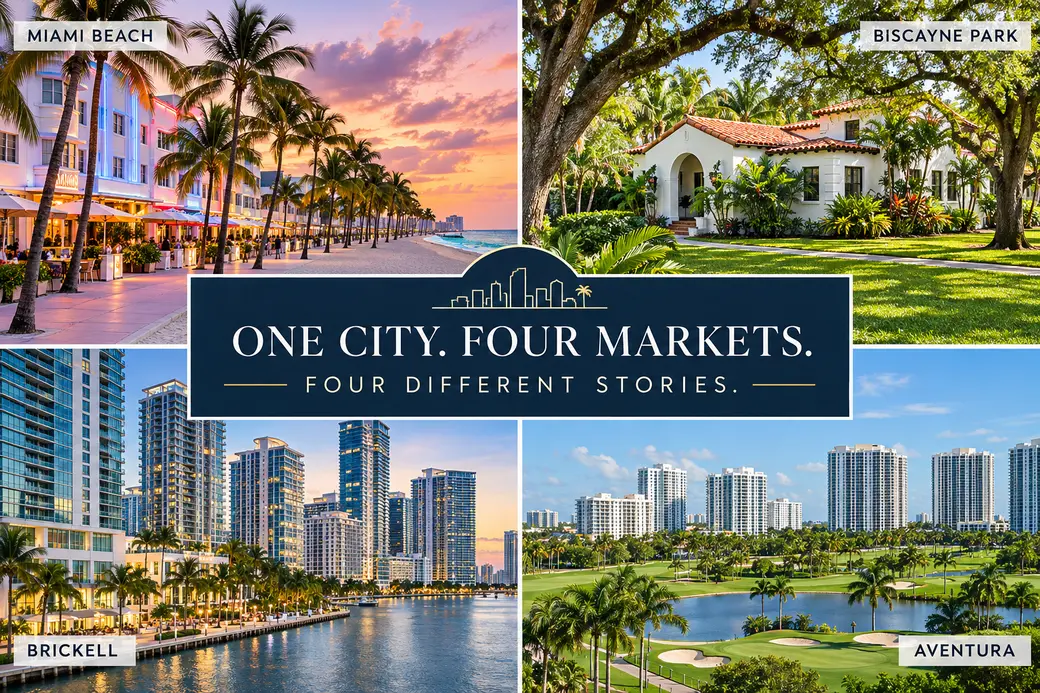
Miami Isn't One Real Estate Market; Here's Why That Matters
What's happening in Brickell may be completely different from what's happening in Biscayne Park.
When you hear headlines about the Miami real estate market, it's easy to assume they're describing what's happening everywhere in Miami-Dade County.
But here's something many buyers and sellers don't realize: Miami isn't really one real estate market. It's a collection of smaller markets, each with its own personality, demand, and pricing trends.
And sometimes, those differences are dramatic.
Same City. Very Different Markets.
Consider just a few examples:
Miami Beach: Condo buyers aren't simply comparing square footage and ocean views anymore. HOA fees, building reserves, insurance costs, and potential special assessments can play a major role in purchasing decisions. Even two buildings across the street from each other can attract very different levels of interest.
Biscayne Park: This charming residential community offers something entirely different. Buyers are often drawn to its tree-lined streets, larger lots, and single-family homes. Here, lot size, property condition, architectural character, and location can significantly influence value.
Brickell: With its concentration of high-rise condominiums, Brickell attracts a different mix of buyers, including professionals, international purchasers, and investors. Building amenities, rental policies, and the availability of comparable units can influence how properties compete.
Aventura: Known for its established condominium communities and convenient lifestyle, Aventura attracts buyers with varying priorities, from seasonal residents to those seeking year-round living. Building finances, amenities, and monthly ownership costs can make a significant difference.
Sometimes, the Difference Is Just a Few Blocks
Even within the same neighborhood, real estate values can vary considerably.
A waterfront property may command a premium over a similar home just a few streets away. A condo in a financially healthy building may be more appealing than one facing significant assessments.
And a beautifully renovated home doesn't necessarily have the same market value as another renovated home nearby if the lot, layout, or location differs.
That's why relying solely on neighborhood averages or online estimates can be misleading.
What Does This Mean for Buyers and Sellers?
If you're selling, understanding your specific micro-market helps you position and price your property appropriately. What worked for a seller in another neighborhood, or even another building, may not work for you.
If you're buying, it means looking beyond the headlines. A slower market in one area doesn't automatically mean buyers have the same negotiating opportunities everywhere.
The key is understanding what's happening with properties that genuinely compare to the one you're buying or selling.
The Bottom Line
Miami's diversity is one of the things that makes its real estate market so interesting. From historic residential neighborhoods to oceanfront condominiums and bustling urban communities, each area tells a different story.
And in real estate, local knowledge isn't just helpful; it can make a meaningful difference in the decisions you make.
Thinking about buying or selling in Miami-Dade? We'd be happy to help you understand what's happening in your specific neighborhood, not just what the headlines are saying.
Categories
Recent Posts







"Molly's job is to find and attract mastery-based agents to the office, protect the culture, and make sure everyone is happy! "