


Older Miami Beach Condos: Bargain or Money Pit?
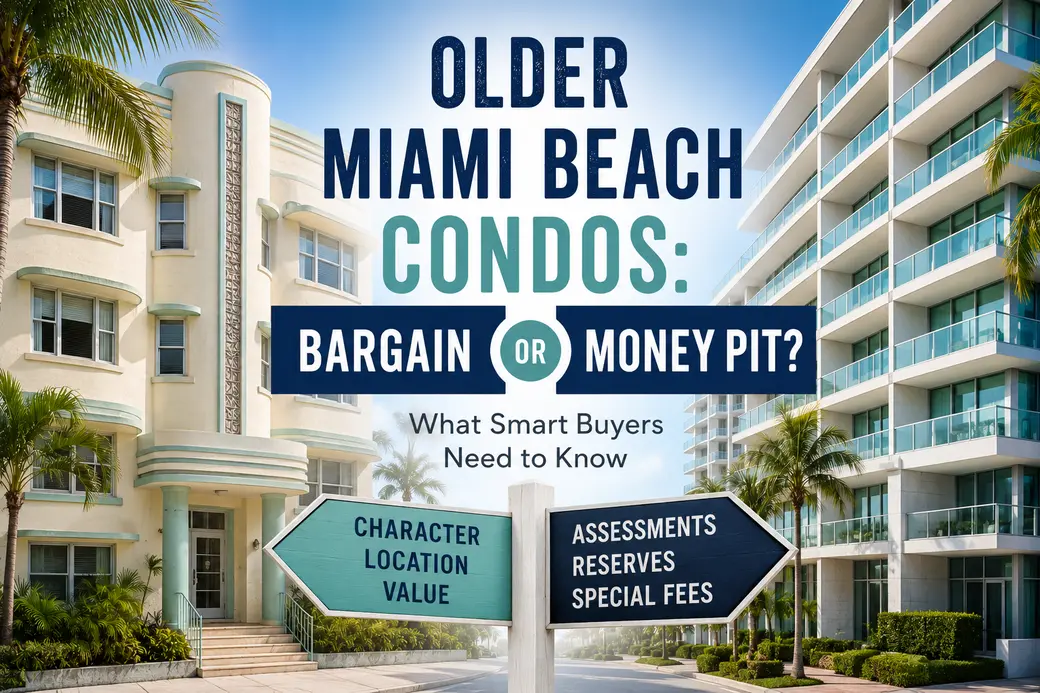
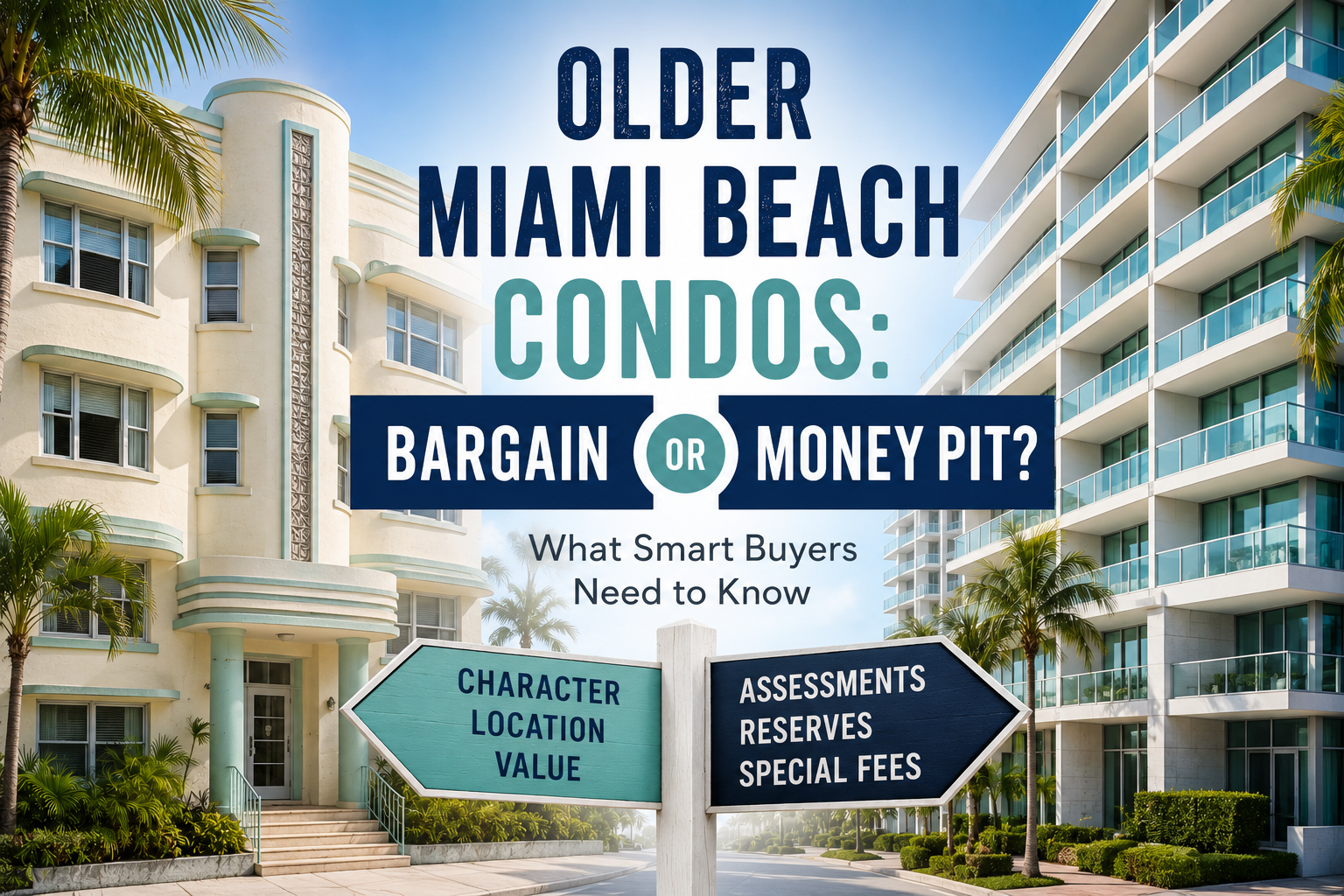
Miami Beach is filled with older condo buildings that have something newer developments often can't replicate: prime locations, character, larger floor plans, and sometimes surprisingly attractive prices.
But when you see a condo just a few blocks from the ocean priced well below a newer building nearby, there's an important question to ask:
Is it a great opportunity—or is there a reason it's cheaper?
The answer isn't as simple as the age of the building.
The Purchase Price Is Only the Beginning
A $400,000 condo isn't necessarily less expensive to own than a $550,000 one.
In an older building, you have to look beyond the asking price and consider the monthly HOA, reserves, insurance, upcoming repairs and—perhaps most importantly—whether there are current or anticipated special assessments.
A unit that looks like a bargain can become considerably more expensive if the building needs major structural, roofing, plumbing or waterproofing work.
On the other hand, an older building that has already completed significant improvements and has healthy reserves can offer excellent value compared with newer construction.
Florida's New Condo Rules Have Changed the Equation
This has become especially important in South Florida.
Many condominium buildings of three or more stories are now subject to Structural Integrity Reserve Studies (SIRS), which evaluate major building components and establish a plan for funding future repairs. Required reserves for these structural items generally can no longer simply be waived by owners as they often were in the past.
Older buildings may also be subject to milestone inspections. In general, qualifying buildings must undergo their first milestone inspection at 30 years and every 10 years thereafter, although local authorities can require the first inspection at 25 years under certain circumstances.
For buyers, that means the financial and physical condition of the building itself matters more than ever.
So What Should You Look At?
Before falling in love with the view—or the price—I want to know what's happening behind the scenes.
How much does the association have in reserves? Has the SIRS been completed? What did the most recent milestone inspection find? Are there special assessments? What major projects have recently been completed, and what is still coming?
I also look closely at the association's budget, meeting minutes, and insurance, because they can reveal issues that aren't obvious when you're touring the apartment.
And don't automatically assume a high HOA is bad or a low HOA is good. A building collecting enough money to properly maintain itself and fund future expenses may ultimately be in a much stronger position than one that has historically kept monthly fees artificially low.
Older Doesn't Automatically Mean Riskier
Some of my favorite Miami Beach buildings are older ones.
They can offer spacious layouts, established neighborhoods, beautiful architecture and locations that would be extraordinarily expensive to reproduce today. And a building that has already addressed its major structural needs and properly funded its reserves may actually give a buyer more clarity about future expenses, not less.
The key is knowing what you're buying.
So, bargain or money pit?
Either is possible.
When buying an older Miami Beach condo today, don't evaluate only the unit. You're also buying into the building—and understanding the difference between the two can be just as important as negotiating the purchase price.
Categories
Recent Posts









"Molly's job is to find and attract mastery-based agents to the office, protect the culture, and make sure everyone is happy! "